


Egg Freezing
An option for women who wish to plan for future parenthood by preserving healthy eggs at the right time, providing greater flexibility in family planning.
About
What is Egg Freezing?
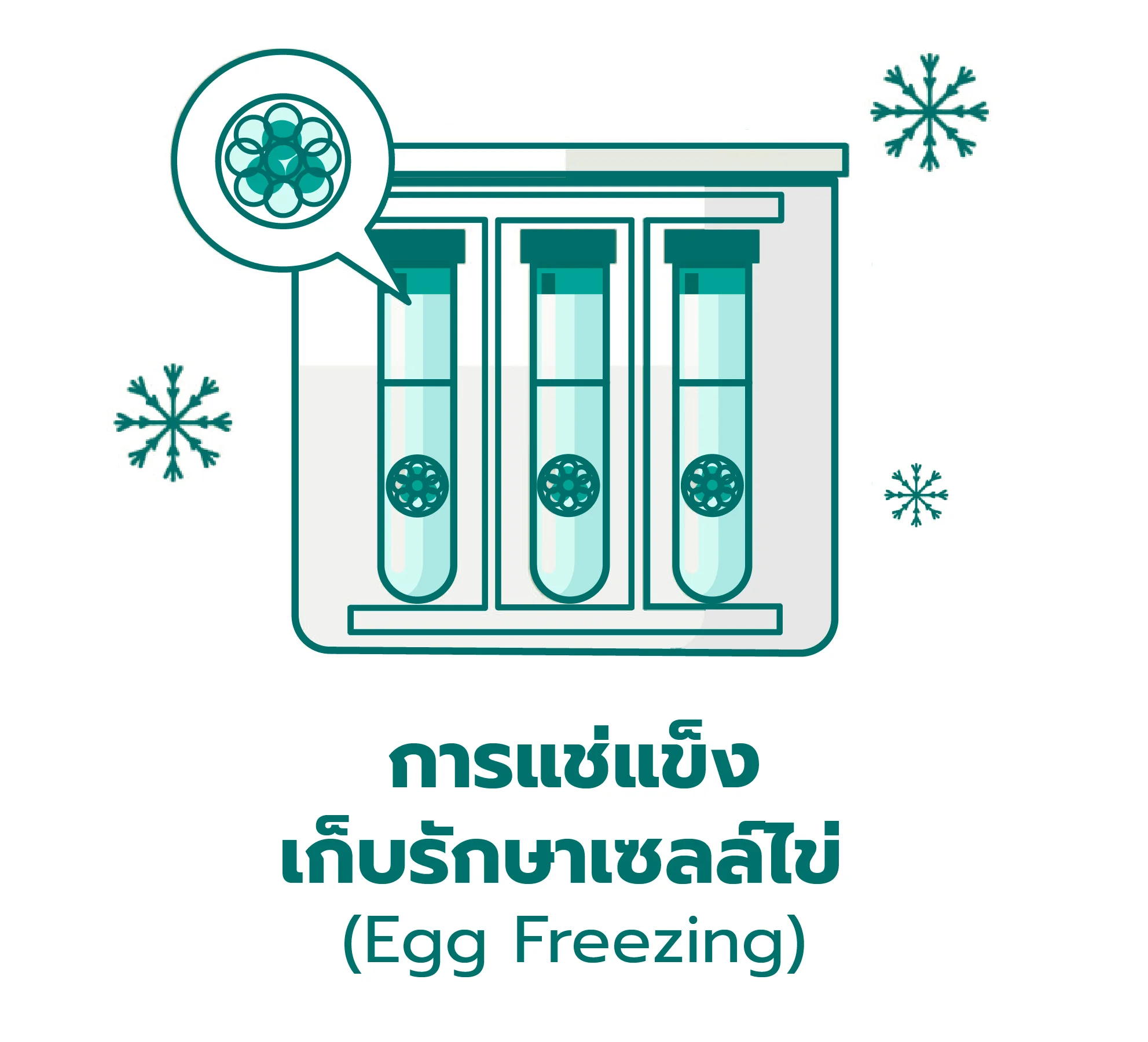
Egg freezing is the process of retrieving and preserving healthy eggs from the ovaries after ovarian stimulation, egg selection, and egg retrieval procedures. The eggs are then frozen and stored in a standardized laboratory environment.
Frozen eggs are preserved in liquid nitrogen to halt cellular changes and can later be used with assisted reproductive technologies such as IVF or ICSI in the future.
Egg Freezing
Suitable for women who wish to preserve their eggs for future use, particularly when egg quality and quantity are still at optimal levels.
Preserve high-quality eggs
Plan for future parenthood
Stored in liquid nitrogen at -196°C
Why It Matters
Why is Egg Freezing an important option?
As women age, both the number and quality of eggs gradually decline, which may affect the chances of pregnancy and increase the risks of miscarriage or chromosomal abnormalities in the baby.
Freezing eggs at an appropriate age helps preserve fertility potential for the future. This is especially beneficial for women who are not yet ready to have children but wish to plan ahead thoughtfully.
-196°C
Storage temperature
Eggs are preserved in liquid nitrogen at -196°C to maintain their quality until they are needed for future use.
Before Freezing
The Process Before Egg Freezing
Before proceeding with egg retrieval, the doctor will assess overall health, hormone levels, and reproductive health to develop an ovarian stimulation plan tailored to each individual.
Consult a Fertility Specialist
Review medical history, reproductive history, medication use, existing medical conditions, and any risk factors that may affect reproductive health.
Physical Examination and Hormonal Assessment
Blood tests, gynecological examinations, and evaluation of key hormone levels such as FSH, TSH, AMH, and Prolactin are performed to assess ovarian function and reproductive readiness.
Ovarian Ultrasound Assessment
An ultrasound examination is performed to evaluate the uterus, fallopian tubes, and ovaries for structural conditions, abnormalities, or other factors that may affect treatment outcomes.
Ovarian Stimulation and Monitoring
The doctor prescribes ovarian stimulation medication and monitors follicular development through ultrasound examinations. The medication is adjusted as needed until the eggs reach the appropriate stage for retrieval.
Process
The Egg Freezing and Storage Process
Administration of Sedation
A short-acting sedative is administered to minimize discomfort and ensure a smooth egg retrieval procedure.
Egg Retrieval
A small needle is guided through the vaginal wall using ultrasound imaging to retrieve the eggs. The procedure typically takes approximately 20–30 minutes.
Transfer to the Laboratory
The retrieved eggs are transferred to a standardized laboratory environment that is sterile and maintained under controlled temperature conditions.
Rapid Freezing
The eggs undergo a rapid freezing process and are then stored in liquid nitrogen at approximately -196°C.
Success Factors
Factors Affecting the Chances of Success
The likelihood of achieving pregnancy using frozen eggs depends on several factors, particularly overall health and age at the time of egg retrieval.
Who Should Consider
Who should consider egg freezing?
People who plan to have children in the future
Suitable for individuals who are not yet ready to have children but wish to preserve their fertility options for the future.
Women over the age of 35
This group should consider evaluating egg quality and planning for future pregnancy more proactively.
People at risk of fertility impairment due to medical treatment
For example, individuals who may need to undergo radiation therapy or chemotherapy, which can affect egg quality and reproductive function.
Women with ovarian conditions
Such as premature ovarian insufficiency, or those who may require ovarian surgery due to ovarian cysts, tumors, or endometriomas (chocolate cysts).
Safety
Is it safe to use frozen eggs in the future?
Egg freezing is an assisted reproductive technology that has been widely used in medical practice. The procedure should be performed under the supervision of qualified medical professionals and in a standardized laboratory environment to help preserve egg quality and minimize risks throughout the treatment process.
Consultation
Consult a Fertility Specialist About Egg Freezing
If you are planning to have children in the future or would like to assess whether egg freezing is suitable for you, you can contact Gift Fertility Centre Bangkok for an initial consultation.