


When a couple begins fertility treatment, choosing an IVF clinic is one of the first major decisions they face. Reputation and price matter, but the choice can also affect their treatment prospects and experience throughout the process.
Many guides suggest looking at the doctors, reviews and success rates. Yet the factors that matter most vary from one case to another. Someone with low AMH, a history of recurrent miscarriage or concerns related to age may need to assess a clinic differently.
From Gift Fertility’s clinical perspective, the starting question is whether a clinic is equipped to meet a particular patient’s needs. This guide covers the criteria worth checking, warning signs to recognise and practical questions to ask before deciding.

How to Choose an IVF Clinic That Suits Your Needs
The short answer is to consider at least four things together: whether the clinic has experience with your circumstances, how transparently it shares information, the quality of its fertility specialists and laboratory, and how clearly it explains the proposed treatment plan. If a clinic cannot answer these basic questions, or presses patients to start treatment before explaining its reasons, that is worth taking seriously.
Why Does the Right Fit Matter More Than the “Best” Clinic?
Patients often look for the best IVF clinic, but there is no single answer that suits everyone. The right clinic depends partly on the issues a person or couple needs help with.
For example, someone with diminished ovarian reserve may place greater weight on a team’s experience in planning ovarian stimulation. Where male-factor infertility is the main concern, expertise in ICSI and the quality of the embryology laboratory may matter more. For patients over 40, relevant questions may include how the clinic assesses embryos, approaches chromosome testing and explains the limits of treatment success.
Rather than asking which clinic is most famous, it is more useful to ask whether its expertise and resources match the problems you are facing.
Eight Things to Check Before Choosing an IVF Clinic
1. Does the Medical Team Have Experience With Cases Like Yours?
Having a fertility specialist is a starting point. The next question is how much experience the team has with patients whose circumstances resemble yours, such as low AMH, recurrent miscarriage, male-factor infertility or age over 40.
What to check
- Review the doctors’ qualifications, specialist training and professional credentials.
- Check whether reproductive medicine specialists are directly involved in care.
- At your consultation, ask how the team typically approaches cases similar to yours.
- Notice whether the explanation reflects your own test results or sounds like the same package offered to everyone.
Gift Fertility’s approach
Gift Fertility focuses on individual assessment and explaining why a particular treatment plan is being considered. The aim is for patients to understand the reasons behind a recommendation, rather than simply being told what to do.
2. Does the Clinic Explain Its Success Rates Transparently?
Success rates are among the figures patients compare most often, yet they are easy to misunderstand. One clinic might report a pregnancy rate, another a clinical pregnancy rate and another a live birth rate. These measures describe different outcomes.
What to check
- Ask exactly what the reported percentage measures.
- Find out whether it is calculated per egg retrieval cycle or per embryo transfer.
- Check whether results are reported across all ages or separately by age group.
- Ask whether the clinic explains the limits of the figures.
Gift Fertility’s approach
Gift Fertility aims to explain what success-rate figures mean rather than using a high percentage as a marketing message on its own. Patients should be able to understand what a reported result does, and does not, tell them about their own circumstances.
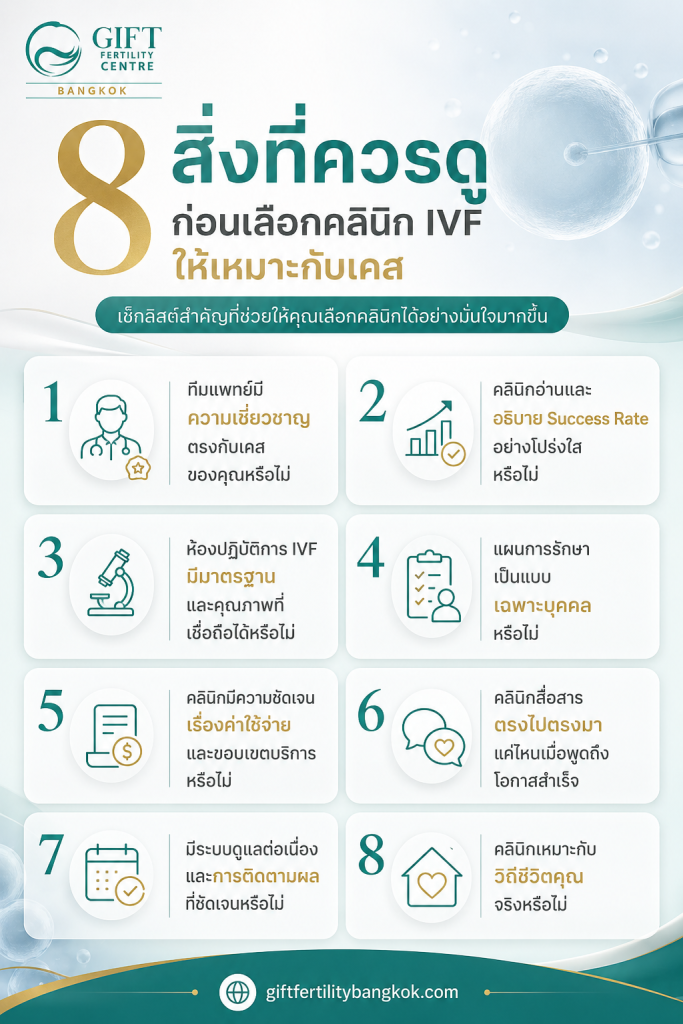
3. Is the IVF Laboratory Reliable and Well Managed?
Patients may naturally focus on their doctor, but laboratory quality also matters. Fertilisation, embryo culture and embryo assessment all take place in the laboratory and can influence what happens next.
What to check
- Ask whether the clinic operates its own IVF laboratory or uses an external facility.
- Ask about technologies in use, such as time-lapse monitoring or an EmbryoScope system.
- Find out which quality-control procedures and standards the laboratory follows.
- Notice whether the clinic can explain its laboratory processes clearly or provide an overview where appropriate.
Gift Fertility’s approach
Gift Fertility places importance on laboratory quality and clear explanations of the technology used. Egg retrieval is only one stage; what happens in the laboratory afterwards is also relevant to treatment outcomes.
4. Is the Treatment Plan Tailored to the Patient?
An IVF plan should reflect a patient’s circumstances rather than follow an identical route for everyone. Age, AMH, body weight, medical and treatment history, and male-factor findings may all affect the options considered.
What to check
- Notice how thoroughly the specialist asks about your medical and fertility history.
- Check whether previous test results are reviewed.
- Ask whether different options, including their benefits and limitations, are discussed.
- See whether your own goals are considered, such as starting treatment soon, freezing embryos or planning more than one cycle.
Gift Fertility’s approach
Gift Fertility bases treatment planning on the patient’s clinical information. Rather than using anxiety to rush a decision, the team seeks to explain the reasoning behind the recommended steps so patients can take part in the decision.
5. Are Costs and the Scope of Services Clear?
Even without comparing specific prices, financial transparency matters when choosing an IVF clinic. The total cost may involve more than the main procedure, including medicines, additional tests, embryo testing or storage fees.
What to check
- Ask the clinic to explain exactly what the quoted price includes.
- Find out which charges might arise later.
- Look for a clear breakdown rather than vague descriptions.
- Be cautious of unusually inexpensive packages that do not specify what is excluded.
Gift Fertility’s approach
Explaining costs involves more than quoting a price. Patients need to know what each charge covers and how it relates to the proposed treatment so they can assess their options with fuller information.
6. How Candidly Does the Clinic Discuss Your Chances of Success?
A clinic’s credibility does not depend on making patients feel as hopeful as possible. Realistic explanations of likely outcomes and limitations are more useful when deciding what to do.
What to check
- Ask about the limitations of your case as well as possible success.
- Notice whether risks are discussed openly.
- Be cautious if everything is presented as easy or certain to go well.
- Expect an explanation of both what may be possible and what could be difficult.
Gift Fertility’s approach
Gift Fertility emphasises realistic expectations. Balanced information is intended to help patients build confidence in the decision-making process without promising more than treatment can deliver.
7. Is There a Clear System for Follow-up and Ongoing Care?
IVF does not end on the day of egg collection or embryo transfer. Patients may need follow-up, test results and answers to questions after a procedure. It helps to know whom to contact and what support to expect.
What to check
- Ask how follow-up is arranged after procedures.
- Check which channels are available for contacting the treatment team.
- Find out whether nurses or coordinators can answer routine questions.
- Observe how appointments and test results are organised and communicated.
Gift Fertility’s approach
Patients often value knowing that support remains available between appointments. Clear follow-up arrangements and explanations can help reduce uncertainty during treatment.
8. Does the Clinic Fit Your Daily Life?
The final consideration is practical: travel, appointment times, repeated visits, follow-up arrangements and how well treatment can fit into work and family commitments.
What to check
- Consider whether travelling to the clinic is manageable.
- Check whether appointment times fit your schedule.
- Think about the effect of frequent visits on work and stress.
- Do not let reputation outweigh the practical demands of attending treatment.
Gift Fertility’s approach
A suitable clinic needs more than medical expertise and facilities. Its arrangements should also allow patients to continue with the planned course of care in practice.
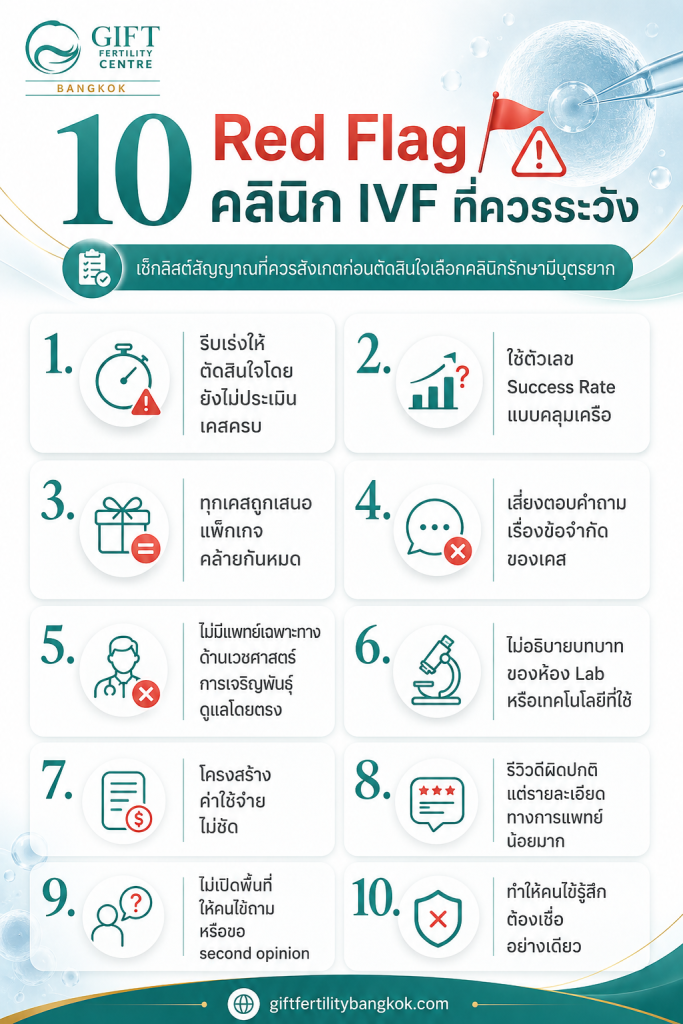
Ten IVF Clinic Warning Signs to Watch For
Knowing what a good clinic should offer is useful. Recognising potential warning signs can be just as important when comparing options.
1. Pressure to Start Before a Proper Assessment
Be cautious if a clinic pushes for an immediate start without reviewing the relevant medical history or test results. Treatment planning should begin with a suitable assessment.
2. Vague Claims About High Success Rates
A statement such as “our success rate is very high” tells patients little without an explanation of how the figure is calculated or whether results are separated by age and patient characteristics.
3. Nearly Identical Packages for Every Patient
If patients with very different medical histories are routinely offered essentially the same plan, it may indicate that individual circumstances are not being considered sufficiently.
4. Avoiding Questions About Treatment Limitations
A clinic that repeatedly gives vague answers when asked about risks, success prospects or reasons treatment might fail deserves closer scrutiny.
5. No Direct Involvement From a Reproductive Medicine Specialist
Patients should know who is responsible for their care and whether that clinician has expertise in fertility treatment.
6. Little Explanation of Laboratory Work or Technology
If a clinic discusses only the medical consultations but cannot explain the role of its laboratory, patients may be missing information needed to assess the whole service.
7. Unclear Pricing
An attractive starting price can be misleading if the clinic cannot explain the additional costs that may arise.
8. Exceptionally Positive Reviews With Little Useful Detail
Reviews can be helpful, but praise for customer service alone does not establish clinical suitability. Look for meaningful detail about the care and information patients received.
9. Discouraging Questions or a Second Opinion
A clinic should allow patients to ask difficult questions and seek another medical opinion without making them feel they have done something wrong.
10. Expecting Patients to Follow Instructions Without Understanding Why
Complex fertility care calls for explanation and discussion. A setting where patients are simply expected to comply, without being given reasons or alternatives, may not be right for them.
Ten Questions to Ask Before Choosing an IVF Clinic
These questions can make comparisons between clinics more structured and help show how openly each clinic communicates.
- How much experience does your team have with cases like mine?
- What exactly does the success rate you quote measure?
- Are those results broken down by age group?
- What standards and technologies does your IVF laboratory use?
- How would the plan differ if I have low AMH or we have a male-factor fertility issue?
- What additional costs might arise beyond the main package?
- If the first cycle is unsuccessful, how would you review the results and adjust the plan?
- What follow-up support and contact options are available after procedures?
- Can I request a second opinion or copies of my test results, and what is the clinic’s policy?
- From your clinical perspective, what should I be aware of and what outcomes are realistic for my case?
Checklist for Choosing an IVF Clinic
Use this checklist when comparing two or three clinics. It can help organise the details that matter to you.
Medical care checklist
- The clinic has fertility specialists directly involved in treatment.
- Treatment plans reflect individual cases rather than following the same approach for everyone.
- Success prospects and limitations are explained realistically.
- Questions about age, AMH and male-factor infertility receive clear answers.

Information and transparency checklist
- Success rates are explained clearly.
- Costs can be broken down and discussed.
- The clinic explains what is included and excluded from the proposed plan.
- Patients can ask questions without feeling pressured.
Follow-up and patient experience checklist
- Follow-up arrangements are clear.
- Appointments and communications are well organised.
- Travelling to the clinic is practical for the proposed treatment schedule.
- Patients leave the consultation with a clearer understanding of their care.
Which Clinic Features Matter Most for Different Fertility Concerns?
- Low AMH:
Look at the specialist’s experience in planning ovarian stimulation, setting realistic goals and explaining what each cycle may achieve. - Male-factor infertility:
Consider ICSI expertise, embryology laboratory quality and whether the proposed fertilisation strategy is explained clearly. - Recurrent miscarriage:
Look for a clinic that can explain how possible underlying factors are assessed and how embryo planning relates to a patient’s pregnancy history. - Age 40 or older:
Place greater weight on realistic expectations, experience with older patients, embryo assessment and careful selection of any additional technology.
Gift Fertility’s Perspective on Choosing an IVF Clinic
At this stage, the questions a suitable clinic should be able to answer may be clearer. For Gift Fertility Bangkok, the aim is not to claim to be the “best” clinic, but to make it possible for patients to assess the clinic against the same criteria used for other providers.
Gift Fertility Bangkok emphasises case-by-case assessment, clear explanations of success rates, transparent information about specialists and laboratory services, and treatment plans supported by clinical reasoning. Patients should understand not only what is being recommended, but why.
Patients can use these eight criteria to assess Gift Fertility just as they would any other clinic. The purpose of this guide is to support decisions based on information rather than marketing claims.
Frequently Asked Questions About Choosing an IVF Clinic
What should I look at first when choosing an IVF clinic?
Start with whether the clinic is suitable for your circumstances rather than its reputation alone. Consider the specialists’ experience, the clarity of the treatment plan and how transparently success rates are explained.
Does having many positive reviews mean a clinic is right for me?
Not necessarily. Reviews may reflect aspects of the patient experience, but they cannot replace a medical assessment or show whether a clinic suits your specific needs.
Can success rates from different clinics be compared directly?
Caution is needed. Clinics may report different measures, such as pregnancy rate or live birth rate. Ask what each figure means before comparing them.
Should someone aged 40 choose a clinic differently from a younger patient?
Yes. Patients aged 40 or over may need to give greater attention to realistic outcome estimates, embryo assessment and individual treatment planning.
Should I seek a second opinion after unsuccessful IVF elsewhere?
A second opinion can be helpful in many cases. It may identify aspects of the previous plan worth reviewing or additional information to consider before another cycle.
Should a large promotion be the main reason to choose a clinic?
No. IVF involves more than price. Also consider the medical team, laboratory, transparency and whether the service fits the patient’s needs.
What should I do if a clinic cannot answer my questions clearly?
Ask for clarification or consider seeking a second opinion. Decisions about IVF should be based on an understanding of the care being proposed rather than uncertainty.
Look Beyond Rankings to Find the Right IVF Clinic
Choosing an IVF clinic is not simply a matter of making a shortlist of familiar names. Patients need ways to work out which features are most relevant to their own circumstances. Understanding those criteria can reduce the likelihood of choosing on image, reputation or short-term pressure alone.
The right clinic should help you understand your treatment rather than leave you increasingly confused or feeling obliged to make a decision before you are ready. If important questions remain unanswered, booking a consultation for an individual assessment may be a more useful starting point than trying to piece together scattered information.
When comparing clinics, discussing the criteria with a fertility specialist can help clarify which considerations matter most for your situation and treatment goals.