


Choosing between IVF and ICSI is one part of planning fertility treatment. The starting point is an assessment of the patient’s health and the other factors that could affect pregnancy.
Even when an appropriate fertility procedure is used, pregnancy does not always follow. Reviewing an unsuccessful cycle involves looking beyond the procedure itself, including health before treatment, daily habits and stress that can affect hormones.
Total Fertility Solution brings medical treatment, lifestyle, emotional support and follow-up into one care plan. These aspects of care are reviewed together, from preparing for treatment to monitoring early pregnancy, so that the plan reflects the patient’s needs at each stage.
What Is Total Fertility Solution?
Total Fertility Solution (TFS) organises fertility care around each patient’s health, treatment history and needs. It includes the initial assessment, treatment planning, care during procedures such as IVF or ICSI, and follow-up during early pregnancy.
TFS describes how these stages of care work together. The treatment plan considers the patient’s physical health, daily habits and emotional wellbeing alongside the medical procedures. The approach has three main features:
- A treatment plan tailored to the patient rather than a fixed package
- Assessment of health and lifestyle factors alongside fertilisation
- Continued monitoring with attention to pregnancy safety
Why Might Several IVF Cycles Be Unsuccessful?
Several IVF cycles can be unsuccessful even when the procedures follow accepted clinical standards. Reviewing earlier cycles involves looking at factors such as:
- Reduced egg quality despite an adequate number of eggs
- Hormonal imbalance around embryo transfer
- A uterine lining that is not ready for implantation
- Stress that can affect hormone function
- Using the same treatment protocol without reviewing previous results
Repeating IVF without reviewing the plan may not substantially improve the chance of success. TFS uses the findings from earlier cycles to identify where treatment or preparation needs to change before another attempt.
How Is Total Fertility Solution Different from Conventional IVF?
IVF is one treatment within the TFS care plan. TFS connects the choice of treatment with assessment, preparation, emotional support and follow-up during early pregnancy.
The distinction is between a treatment procedure and the way care is organised around it. TFS describes how these stages are planned and followed together.
| Area | Conventional IVF | Total Fertility Solution |
| Approach | Procedure-focused | Whole-person care |
| Treatment | Standard protocol | Individualised plan |
| Factors considered | Eggs, sperm and embryos | Reproductive health, lifestyle and emotional wellbeing |
| Goal | Fertilisation | A safe pregnancy |
| Follow-up | Ends after embryo transfer | Ongoing monitoring |
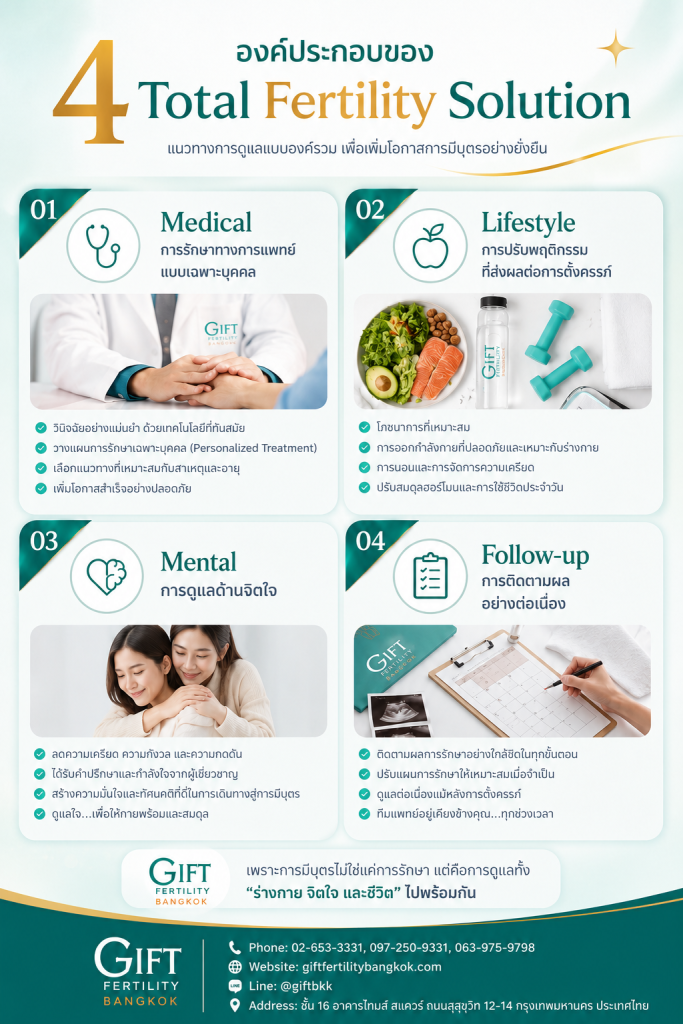
The Four Components of Total Fertility Solution
TFS at Gift Fertility has four components: medical treatment, lifestyle, emotional support and follow-up. Together, they cover preparation, treatment and ongoing care.
1. Medical: Individualised Fertility Treatment
The fertility specialist reviews age, AMH results, previous treatment and male-factor findings to choose the treatment method and protocol. These details guide decisions about medication and the timing of embryo transfer. Changes to medication or transfer timing can affect the outcome, even when the adjustment itself is small.
2. Lifestyle: Habits That May Affect Fertility
Sleep, nutrition, weight and exercise are reviewed as part of treatment planning because they can affect reproductive health. The review covers habits and health factors such as:
- Inadequate sleep, which can disrupt hormone regulation
- Excess weight, which can affect the response to stimulation medication
- Dietary patterns that can affect egg and sperm health
3. Mental: Emotional and Psychological Support
Emotional support is part of TFS care because stress and anxiety can affect hormone function and how patients cope with treatment. The fertility specialist explains the treatment steps and discusses realistic expectations, giving patients a clearer understanding of what will happen and what the results could mean. This understanding can help reduce stress during treatment.
4. Follow-up: Continued Monitoring
Follow-up continues after embryo transfer and into early pregnancy. The fertility specialist reviews hormone test results, monitors pregnancy development and adjusts medication when needed. Each appointment provides information for deciding whether to continue the current medication or make changes as the pregnancy progresses.
Why Does Gift Fertility Use the Total Fertility Solution Approach?
The Gift Fertility specialist team uses TFS to review medical treatment alongside the patient’s health, daily habits and emotional wellbeing. An unsuccessful cycle prompts a review of these factors together with the procedure and its results. This review helps the team:
- Use assessment findings to plan treatment
- Identify what needs adjusting before another cycle
- Explain the treatment plan and the reasons behind it
- Revise the plan using results from each cycle
Gift Fertility uses TFS to make these reviews part of ongoing care. The choice of treatment follows an assessment of the patient, with later decisions informed by how treatment progresses.
Total Fertility Solution at Gift Fertility
At Gift Fertility, TFS connects the initial assessment, treatment planning and follow-up. Information from each stage is used to guide the next, including decisions about medication, treatment timing and further monitoring.
The fertility specialist reviews these findings alongside the patient’s history and response to treatment. This allows the plan to be adjusted as new results become available.
Who Might Benefit from Total Fertility Solution?
TFS supports treatment planning for patients with different fertility histories and needs. These include patients who:
- Have had an unsuccessful IVF cycle
- Have low AMH
- Have male-factor fertility problems
- Have experienced recurrent miscarriage
- Are aged 35 or over
The approach also applies to patients beginning fertility care who want an assessment and treatment plan that covers medical needs, lifestyle, emotional support and follow-up from the start.
FAQ Frequently Asked Questions About Total Fertility Solution
Is Total Fertility Solution a Package?
No. TFS is an approach to organising fertility care. The treatment plan is tailored to the patient rather than offered as a fixed package.
Does TFS Always Involve IVF?
No. The fertility specialist reviews the assessment findings before recommending a treatment method.
Can TFS Improve the Chance of Success?
TFS focuses on factors that affect treatment success. Assessment findings guide the treatment plan and the management of relevant risks.
Is It Suitable for Everyone?
Its role depends on the patient’s needs. It is particularly relevant when several factors need to be addressed within one treatment plan.
How Can Someone Get Started?
Start with a fertility assessment with a specialist. The appointment covers the assessment findings and treatment options.
How Is TFS Different from Standard IVF?
IVF is a treatment procedure. TFS describes how assessment, treatment, lifestyle support, emotional care and follow-up are planned together.
Is TFS Worth Considering After Unsuccessful IVF?
Yes. TFS includes reviewing previous cycles to identify what needs attention and what to adjust before another attempt.
Does It Take Longer?
TFS does not necessarily mean a longer treatment timeline. It includes reviewing results as treatment progresses so that adjustments can be planned before the next step.
Starting with a Clearer Treatment Plan
Fertility treatment starts with understanding the patient’s health and the factors affecting pregnancy. The assessment provides the basis for choosing a treatment method and deciding when to begin.
Total Fertility Solution combines these findings with lifestyle support, emotional care and follow-up. Results from each stage guide the next decision, allowing the fertility specialist to adjust the plan as treatment progresses.
The priority is to begin with a plan suited to the patient’s needs and test results, with clear reasons for the treatment being recommended.